
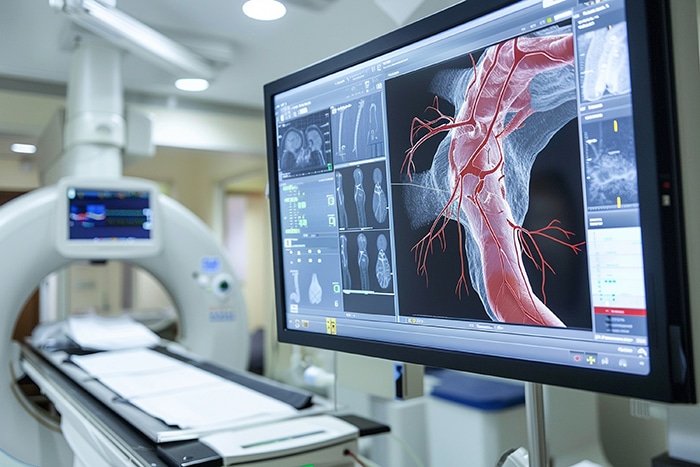
A peripheral angiography, also known as a peripheral catheterization, is a minimally invasive procedure used to examine the blood vessels outside of the heart, including those in the arms, legs, and neck. At Orion, this diagnostic procedure helps us identify blockages, narrowing, or other abnormalities in your circulation.
During a peripheral angiogram
A thin, flexible catheter is gently inserted through a small incision in the arm or leg (typically less than one-tenth of an inch).
The catheter is guided into the blood vessels being evaluated.
A special contrast dye is injected through the catheter, and X-ray images are taken to map the blood flow and detect any blockages or abnormalities.
This provides a detailed view of your vascular system and helps guide any future treatment decisions, such as angioplasty or stenting, if necessary.
Peripheral angiography is typically performed with local anesthesia (usually lidocaine) to numb the insertion site. Most patients remain awake during the procedure and receive light sedation to stay relaxed and comfortable.
Since there are no nerve endings inside your blood vessels, you won’t feel the catheter as it moves through your body. Patients are asked to lie flat during the procedure, which is generally well tolerated and free of significant discomfort.
At Orion, we combine leading-edge diagnostics with compassionate, personalized care. If you’re experiencing symptoms of poor circulation or vascular discomfort, our team is here to help you take the next step toward relief and recovery, with confidence and expert guidance.
Peripheral angioplasty is a minimally invasive procedure performed to open narrowed or blocked arteries outside the heart, most commonly in the legs, arms, or abdomen, or to stabilize weakened or dilated blood vessels that may be at risk of rupture.
At Orion, we use peripheral angioplasty and stenting to treat symptoms caused by peripheral vascular disease, including:
- Leg pain while walking (claudication)
- Non-healing wounds on the feet or legs
- Carotid disease or stroke risk
- Aneurysmal (bulging) arteries at risk of rupture
These symptoms often result from atherosclerosis, a condition in which fatty plaque and calcium build up in the artery walls, narrowing the vessels and reducing blood flow. In some cases, the blood vessel walls become weakened and expand abnormally, increasing the risk for dangerous complications.
A small incision (typically less than one-tenth of an inch) is made in the leg or arm.
A flexible tube called a catheter is inserted and guided to the affected artery.
A fine wire is passed through the narrowed or weakened section of the blood vessel.
To treat the area, your physician may:
- Inflate a balloon to widen the narrowed artery
- Place a stent, a small mesh tube that helps keep the artery open
- Use other specialized tools based on the specific anatomy and condition
- Over time, the artery wall naturally grows around the stent, much like ivy wrapping around a fence, helping to secure it in place and maintain long-term blood flow.
After angioplasty or stenting, your physician will prescribe medications that are essential for healing and preventing complications:
An additional antiplatelet medication (such as clopidogrel) may be recommended for a period of time based on your individual case and stent type.
Important: Do not stop taking any prescribed medications without first speaking with your provider, even if you feel well. These medications play a vital role in your recovery and long-term vascular health.
At Orion our expert team provides the highest level of care for patients with complex vascular conditions. Using leading-edge interventional techniques and a patient-first approach, we help restore healthy circulation and improve quality of life, safely and effectively.