
Welcome to Our Ambulatory Surgery Center
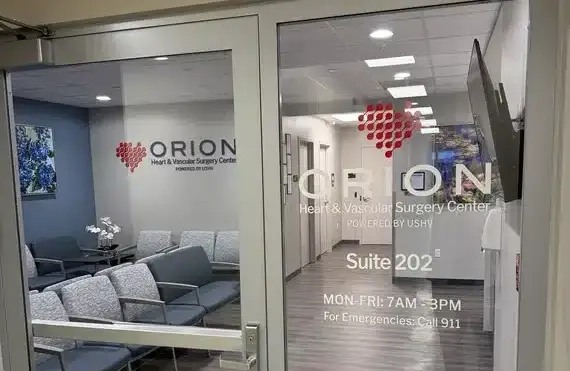
Our state-of-the-art Orion Medical Surgery Center offers a safe, efficient, and patient-centered environment for outpatient procedures. Designed for comfort and convenience, our center allows you to receive high-quality surgical care without the need for an overnight hospital stay. From pre-operative preparation to recovery, our experienced team is dedicated to delivering personalized care and exceptional outcomes in a modern, streamlined setting. Contact us at (713) 263-5054 or [email protected].
What to expect
Thank you for choosing Orion Ambulatory Surgery Center for your procedure. We strive to provide excellent service in a caring and healing environment. The following information will assist you in preparing for your procedure, what to expect the day of your procedure, and recovery after the procedure. Please review the enclosed instructions.
A member of the clinical team at the Orion Surgery Center will reach out to you prior to your procedure. They will review your pre-procedure instructions, confirm your arrival time, and address any questions you may have.
- Once you are scheduled for your procedure at the ASC, a team member will contact you about your insurance and coverage.
- A nurse from the surgery center will call you 1-3 business days before your appointment to discuss pre-operative instructions and answer any questions you may have.
- Your physician will order laboratory tests for you prior to the procedure.
- If you are having moderate sedation: You should not drink or eat solid food 6 hours before your procedure. Please follow your physician’s instructions about the medications to take the morning of your procedure.
- If you have an Advanced Directive or Medical Power of Attorney, please bring a copy to the center on the day of your procedure. You may complete these documents at https://www.hhs.texas.gov/formas/advance-directives
- An adult over the age of 18 must drive you home after your procedure.
For your health and safety, please check with your physician before and after your procedure to determine which medication(s) to continue or discontinue.
- List of current medications, including all herbal and over-the-counter medications
- Driver’s License or other form of state or federal ID
- Insurance card(s)
- Cashier’s check or credit card for any co-pay or deductible that is owed.
- Comfortable, loose-fitting clothes; if having a pacemaker or defibrillator implanted, please wear a button-up shirt
- Advanced Directive or Medical Power of Attorney documents.
- We recommend any visitor accompanying you bring a light jacket while they wait for you in the waiting room.
- DO NOT bring anything of value to the center.
- The room will be cool; warm blankets are available at your request
- You will be connected to monitoring equipment, such as the blood pressure cuff, heart monitor, and pulse oximetry
- A nurse will remain with you during your procedure to ensure your safety and comfort.
- Your friends and family will be in the Orion ASC waiting room. The physician will speak to them after the procedure.
- You will be taken to the recovery room, where a nurse will care for you.
- Your physician will determine the length of time for your bed rest.
- Your vital signs will be monitored during your recovery.
- Pain Management: Pain control is essential to us. Please tell your nurse at any time if you are uncomfortable.
- While in recovery, the nurse will provide you with a light snack and beverage.
- You and the responsible adult will receive verbal and written discharge information.
- We recommend your caregiver stay with you for 24 hours following the procedure.
- We encourage you to complete our patient survey before leaving the center.
- The ASC nursing staff will call you the next day.
Surgery Center Procedures
Cardiac Catheterization
A cardiac catheterization, also known as a coronary angiogram or heart cath, is a minimally invasive procedure used to diagnose abnormalities or blockages in the coronary arteries, which supply blood to the heart muscle.
Learn MoreCoronary angioplasty and stenting
Coronary angioplasty, also known as percutaneous coronary intervention (PCI), is a procedure used to restore blood flow in blocked or narrowed coronary arteries. These blockages are often caused by plaque buildup, a result of coronary artery disease, that restricts blood supply to the heart muscle.
Learn MoreAdvanced Vascular Imaging at Orion
A peripheral angiography, also known as a peripheral catheterization, is a minimally invasive procedure used to examine the blood vessels outside of the heart, including those in the arms, legs, and neck. At Orion, this diagnostic procedure helps us identify blockages, narrowing, or other abnormalities in your circulation.
Learn MorePermanent Pacemaker Placement
A pacemaker is a small medical device implanted under the skin that sends gentle electrical signals to the heart, helping it maintain a normal rhythm and rate. We use pacemakers to treat conditions like bradycardia (a slow heart rate), which can lead to fatigue, dizziness, or even fainting spells.
Learn MoreImplantable Defibrillator (ICD) Placement
Protecting Your Heart with Advanced Rhythm Management
An implantable cardioverter defibrillator (ICD) is a small, life-saving medical device placed under the skin to monitor and regulate abnormal heart rhythms. At Orion, we use ICDs to protect patients at high risk of sudden cardiac arrest or life-threatening arrhythmias.
Implantable Loop Recorder (ILR) Procedure
Advanced, Long-Term Heart Rhythm Monitoring
An implantable loop recorder (ILR) is a small, discreet device placed just beneath the skin of the chest to continuously monitor your heart’s rhythm over an extended period of time. It is especially helpful for diagnosing intermittent or unexplained symptoms such as fainting, dizziness, or palpitations that may be related to abnormal heart rhythms.
Cardiac Ablation Procedure
Restoring Normal Rhythm with Precision Care
Cardiac ablation is a minimally invasive procedure used to correct heart rhythm problems, also known as arrhythmias, by targeting and treating the specific areas of heart tissue that are causing irregular electrical signals. At US Heart and Vascular, our experienced electrophysiologists perform this advanced procedure to help patients achieve long-term relief from symptoms like palpitations, dizziness, fatigue, or fainting.
Contact Orion Medical Surgery Center
Thank you for trusting us with your care.